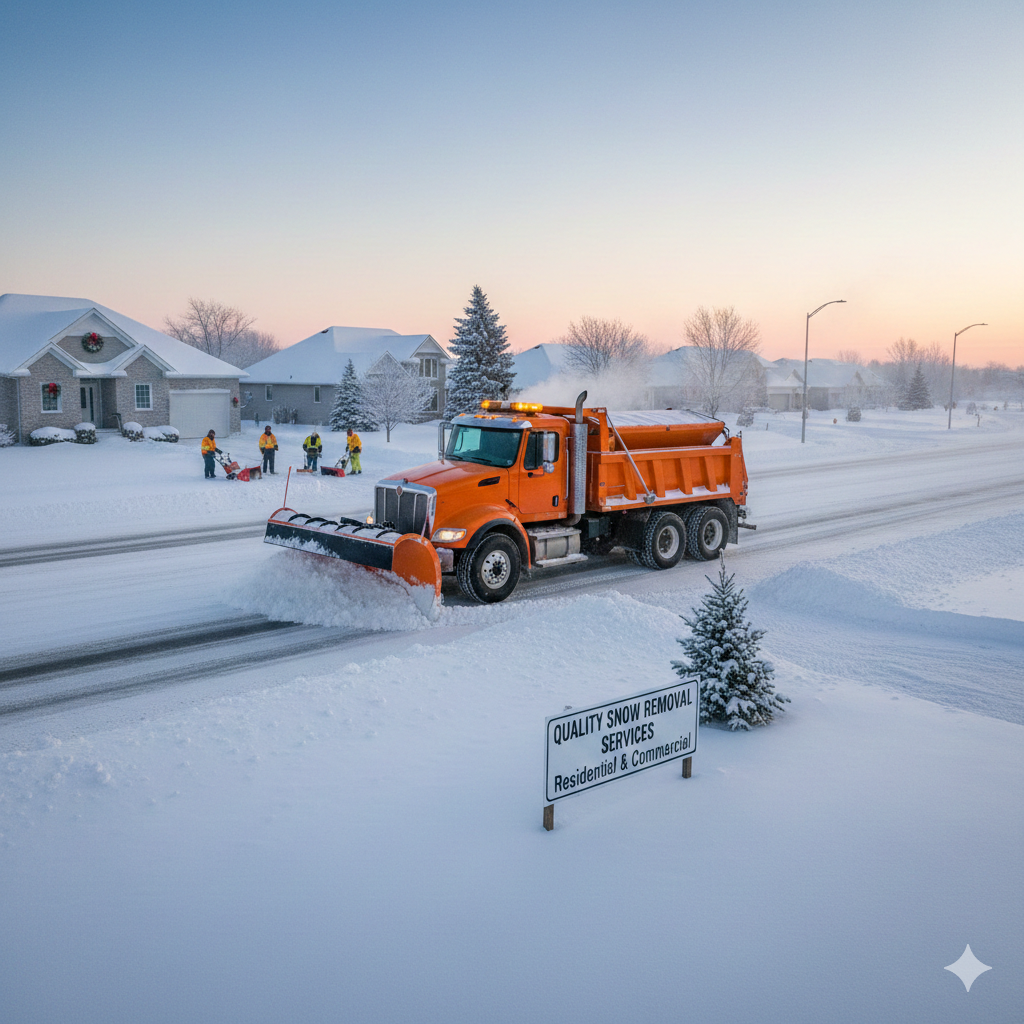
You need a reliable snow removal service that keeps your property safe, accessible, and compliant with local rules without wasting your time or risking damage. A professional provider will clear driveways, walkways, and parking areas promptly, using the right equipment and de-icing methods to prevent slips, fines, and vehicle access problems.
This article Snow Removal Service shows what professional snow removal covers, how providers guarantee timely service, and which factors matter when choosing a contractor so you can pick the best option for your home or business. Learn practical tips for comparing quotes, availability, equipment, and service guarantees so you get predictable results all winter.
Professional Snow Removal Service Overview
You get scheduled and on-demand clearing, ice control, and equipment-based removal tailored to property type and risk level. Contracts range from single visits to season-long service with documented response times and liability measures.
Types of Snow Removal Services
- Plowing and hauling: Use for driveways, parking lots, and large commercial sites. Plows clear surface accumulation; trucks haul excess snow offsite when piles would obstruct visibility or access.
- Snow blowing and shoveling: Best for walkways, stairs, and tight residential areas where heavy equipment can’t reach. Technicians use backpack blowers or manual shovels for precision.
- De-icing and anti-icing: Salt, calcium chloride, or environmentally safer alternatives prevent refreeze and reduce slip risk. Anti-icing treatments apply before a storm; de-icing treats packed snow and ice after accumulation.
- Emergency and 24/7 dispatch: Rapid-response teams handle unexpected heavy storms, overnight drift, or priority clearing for medical and delivery access.
- Season contracts vs. per-event: Contracts define response time, number of visits, and liability coverage. Per-event service suits occasional needs but may have longer response windows.
Residential and Commercial Solutions
For residential clients, typical offerings include driveway plow service, sidewalk clearing, and porch/stair shoveling. You can choose single-event visits, seasonal plans with preset visit counts, or “show-up” service after each snowfall. Equipment ranges from skid-steers to small plows and snow blowers, and many providers offer bundled de-icing for safety.
Commercial solutions focus on regulatory compliance, ADA access, and business continuity. Services include lot plowing, snow relocation, sidewalk and entryway maintenance, curb-to-curb clearing, and documented site inspections. Providers often supply written protocols, monitoring systems, and liability documentation so you can meet municipal ordinances and reduce slip-and-fall exposure.
Choosing the Right Snow Removal Provider
Select a provider that matches your property size, budget, and required level of service. Focus on measurable things: equipment, contract terms, proof of work, and how quickly they respond to storms.
Factors to Consider
Check what services the company actually offers and match them to your property: driveway plowing, sidewalk shoveling, de-icing, and post-storm cleanup are common options. Confirm whether they clear to pavement or leave a protective snowpack on sensitive surfaces, and whether they move snow off-site or pile it on your property.
Ask about equipment and crew size for properties like yours. A single skid-steer or a multi-truck fleet makes a big difference for commercial lots versus a single-family driveway. Get written pricing models: per-visit, seasonal contract, or hourly plus materials. Compare typical storm costs, not just base rates, so you know what you’ll pay during heavy snow.
Request references and recent photos of completed jobs for similar properties. Look for clear work records, damage history, and whether they honor cleanup and follow-up for missed spots.
Licensing and Insurance
Verify the company’s business license and local permits if your municipality requires them. Licensing confirms they operate legally and follow local snow removal ordinances that can affect liability and snow placement.
Demand proof of insurance: general liability and workers’ compensation are essential. General liability covers damage to paved surfaces, landscaping, and structures; workers’ comp covers injuries on your property. Ask for certificates that list your address as a covered location when possible.
Confirm the insurance limits and exclusions in writing. Note any deductible amounts and whether subcontractors are used; subcontractors should carry their own insurance and be named on the certificate. Keep copies of all documents with your contract.
Response Time and Availability
Define expected response times up front: immediate push during a storm, within X hours after the last flake, or scheduled daily visits. Specify triggers for service—depth of accumulation (e.g., 2 inches), wind-blown drifts, or ice formation—and how those triggers affect billing.
Ask about staffing plans for multi-day storms and holiday coverage. A reliable provider shares contingency plans and backup crews to avoid long delays. Get a point of contact for after-hours emergencies and a published SLA (service-level agreement) or written policy for missed calls and no-shows.
Confirm availability windows in the contract and penalties or credits for missed service. That gives you leverage and predictable expectations when winter conditions worsen.