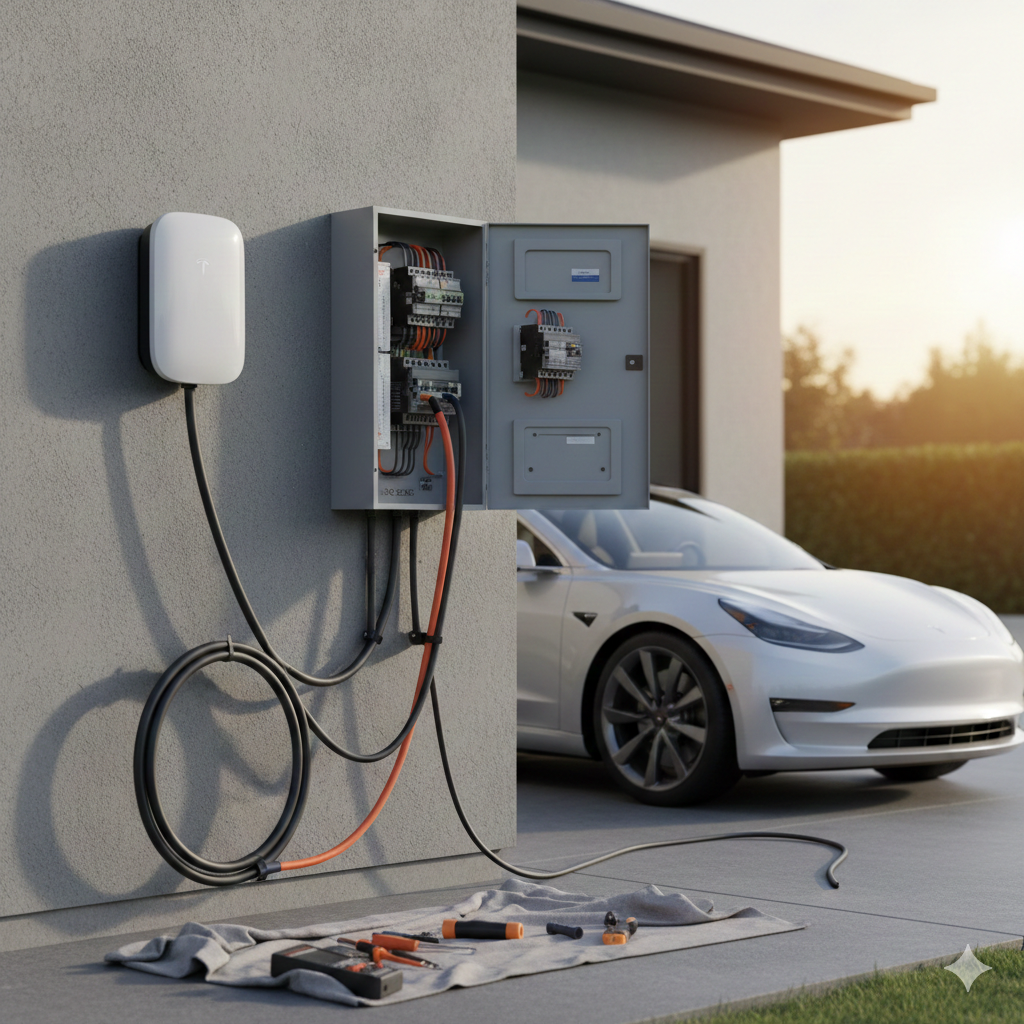
If your home trips breakers, struggles with modern appliances, or still uses a fuse box, an electrical panel upgrade near you can fix those problems and prevent safety risks. Upgrading your panel increases capacity, improves safety, and brings your system up to current codes so your home can handle today’s power demands.
You’ll find guidance on what an upgrade involves like electrical panel upgrade, how to spot signs you need one, and how to choose a licensed local electrician who follows proper permitting and installation steps. Knowing what to expect helps you compare quotes confidently and avoid common pitfalls when hiring a pro.
Understanding Electrical Panel Upgrades
An electrical panel upgrade near me replaces your home’s main breaker box to handle higher power demand, improve safety, and meet current code. You’ll learn how to spot problems, what improvements modern panels provide, and when replacement is preferable to repair.
Signs Your Electrical Panel Needs an Upgrade
Look for frequent circuit trips, flickering lights, or outlets that feel warm to the touch. These indicate overloaded circuits, loose connections, or failing breakers that can create fire risk.
If your panel is more than 25–30 years old or uses fuses or a Stab-Lok/ Federal Pacific style, plan an upgrade. Older panels often lack sufficient amperage for EV chargers, multiple HVAC systems, or modern kitchen appliances.
You may also notice burning smells, corrosion, or scorch marks on the panel cover. If you’re adding rooms, installing a hot tub, or converting a garage, an electrician should inspect capacity and load calculations before you proceed.
Benefits of Modern Electrical Panels
Modern panels provide increased amperage (commonly 100–200 A), space for more circuits, and improved breaker technology to reduce nuisance trips. That lets you run multiple high-draw devices—EV charger, heat pump, range—without overloading the system.
They include safer components: arc-fault circuit interrupters (AFCIs) and ground-fault circuit interrupters (GFCIs), which lower shock and fire risk. New panels also meet updated local codes, simplifying permitting and resale inspections.
Upgrades can improve energy management when paired with subpanels or smart breakers for circuit-level monitoring and remote control. A correctly sized panel often reduces energy losses from outdated wiring and improves overall reliability.
Differences Between Replacement and Repair
Repair fixes specific faults: replacing a single breaker, tightening a lug, or cleaning a corroded connection. Use repair when the panel is modern, has adequate capacity, and the issue is isolated.
Replacement involves installing a new main panel or increasing amperage and circuit count. Choose replacement if the panel is obsolete, damaged, undersized for your needs, or fails inspection.
Consider cost and future needs: repairs are cheaper short-term, but repeated issues or plans for high-demand equipment make replacement more cost-effective. Always hire a licensed electrician to evaluate load calculations, grounding, and code compliance before deciding.
Choosing an Electrical Panel Upgrade Service Near You
Find a licensed electrician who offers clear pricing, local permits, and a written scope of work. Expect to compare bids, check references, and confirm insurance before scheduling the job.
How to Select a Qualified Electrician
Look for a licensed electrician or electrical contractor with experience upgrading panels to the capacity you need (e.g., 100A → 200A). Verify state or provincial licensing and ask for the license number; call the issuing authority if you need confirmation.
Check insurance: demand proof of general liability and workers’ comp. Request written references from recent panel upgrades and read online reviews for patterns about punctuality and cleanup. Ask whether the techs are company employees or subcontractors.
Confirm they handle permits and inspections. A qualified pro will pull permits, schedule the municipal inspection, and provide the inspection report. Get a detailed written estimate that lists parts (panel make/model, main breaker size), labor hours, permit fees, and disposal costs.
Estimated Costs and Timelines
Typical residential upgrades range from roughly $1,000 to $3,500, depending on panel rating, labor complexity, and local permit fees. Higher-end or complicated installs (meter relocation, service mast replacement, or adding subpanels) can push costs higher.
Timeline: a straightforward 100A-to-200A swap usually takes 4–8 hours onsite for an experienced crew. Permit approval and inspection scheduling can add several days to two weeks. If you need utility coordination (meter upgrade or service disconnect), allow an extra 1–3 weeks.
Ask for a written cost breakdown: materials, labor rate, permit fee, and potential contingency charges. Confirm payment terms and whether a deposit is required. Get targeted estimates from at least three providers to compare.
What to Expect During the Upgrade Process
On arrival, the crew will shut off service, remove the old panel, and install the new panel and main breaker. They’ll re-label circuits, reconnect branch circuits, and test each breaker and grounding/neutral connections.
Permits and inspection: the tech should present the permit card at the start and schedule the final inspection. Expect a municipal inspector to verify safe wiring, proper grounding, and compliant breaker sizing.
Post-work documentation: receive the final invoice, permit/inspection sign-off, and any product warranties. You should also get guidance on load distribution and whether additional changes (dedicated circuits, AFCI/GFCI upgrades) are recommended.