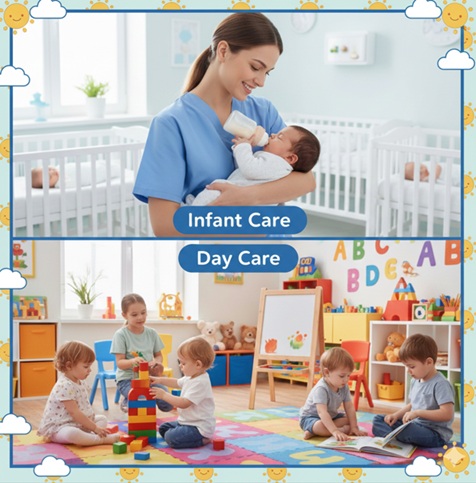
Finding the best infant daycare near me means matching safety, caregiver qualifications, and a nurturing daily routine to your child’s needs. Start by prioritizing licensed centers with clear staff-to-infant ratios, up-to-date health and safety practices, and positive inspection records—those elements give you the most reliable signal of quality.
You’ll learn how to evaluate programs for infant daycare, check availability and subsidies, and compare nearby licensed options so you can make a focused choice that fits your schedule and budget. Expect practical tips on visiting centers, asking the right questions, and interpreting program types so you feel confident about the next step for your family.
How to Choose the Best Infant Daycare Near Me
Focus on measurable, observable factors: caregiver-to-infant ratios, daily routines, health protocols, licensing, and parent communication. Prioritize centers that document feeding/sleeping, show clear emergency plans, and welcome unannounced visits.
Key Qualities of a Trusted Infant Daycare
Look for low caregiver-to-infant ratios—ideally 1:3 or 1:4 for infants. Ask for staff resumes and verify recent pediatric CPR and infant first-aid certifications.
Observe daily routines: consistent nap schedules, individualized feeding plans, and age-appropriate sensory activities. Check that teachers use written plans and developmental tracking tools you can review.
Evaluate staff turnover and references. Request names of current parent references and call them. High retention and positive parent reports indicate predictable care and stronger caregiver–infant bonds.
Safety and Cleanliness Standards
Confirm daily cleaning logs and visible handwashing stations. Surfaces, toys, and crib areas should show regular disinfection; ask for their cleaning schedule and products used.
Inspect the facility for secure entrances, functioning smoke detectors, and accessible first-aid kits. Verify how the center documents incidents and communicates them to you.
Ask about illness policies and sick-child exclusion criteria. Ensure the center enforces vaccine requirements for staff, has an isolation plan for symptomatic infants, and requires staff to stay home when ill.
Licensing and Accreditation Factors
Verify state licensing status and view the license posted on site or online. Licensing ensures minimum staffing, space, and health standards that protect your child.
Look for additional accreditation from national organizations (e.g., NAEYC or similar). Accreditation indicates the center meets higher-quality benchmarks like curriculum review and professional development.
Request inspection reports and recent corrective action records. Review them for recurring violations or unresolved safety issues before you enroll your infant.
Understanding Infant Daycare Programs
You’ll learn what daily schedules, learning goals, feeding/sleep policies, and caregiver credentials look like in high-quality infant daycare. Focus on predictable routines, individualized care, and staff training that ensures safety and early development.
Curriculum and Daily Routines
Look for programs that follow age-appropriate objectives: sensory exploration, motor skill support, language exposure, and social-emotional attention for infants up to 18 months. Routines should balance short activity windows with frequent naps and feeding times tied to each child’s home schedule.
Typical day elements to expect:
- Arrival transition with a quick caregiver check-in and individualized feeding plan.
- Scheduled care cycles (feed, nap, diapering, short play) repeated every 1–2 hours.
- Focused interactions such as tummy time, read-alouds, and simple songs in 5–15 minute segments.
- Outdoor or stroller time when weather permits.
Ask whether the program documents each infant’s feedings, sleeps, and diaper changes, and how they communicate that data to you. That tracking shows adherence to individualized routines.
Staff Qualifications and Training
Prioritize centers that require early childhood credentials plus infant-specific training. You want staff who hold at minimum a Child Development Associate (CDA) or state-equivalent certification and have completed coursework or workshops in infant safety and development.
Key training and policies to verify:
- Infant CPR and pediatric first aid current for all caregivers.
- Safe sleep training aligned with AAP guidelines and written sleep policies.
- Health and illness protocols and background checks for every staff member.
- Low staff-to-infant ratios (for example, 1:3 for under 12 months) and stable staffing assignments.
Also ask about ongoing professional development, supervision practices, and whether the program uses developmentally informed observation tools to tailor care to each infant.