When Writing No Longer Proves Humanity
There was a time when ai detector writing itself was proof of human effort. Today, that assumption no longer holds. Words can be generated in seconds, shaped to sound polished, and delivered at scale.
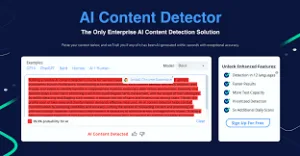
This shift creates a new need—not for more content, but for content verification. An AI detector emerges as the response to this new uncertainty, asking a simple but powerful question: Who—or what—wrote this?
The Rise of Invisible Authorship
Modern AI doesn’t just generate text—it blends in. It mimics tone, structure, and even subtle linguistic patterns. As a result, authorship becomes invisible.
This is where the AI detector plays a unique role. It doesn’t just scan words—it interprets patterns of probability, predictability, and linguistic behavior.
It looks for things like:
- Overly balanced sentence construction
- Uniform tone across long passages
- Predictable word sequencing
These signals are often too subtle for readers to notice, but not for detection systems.
Detection Is Not About Blame—It’s About Clarity
There’s a misconception that AI detectors exist to “catch” or “penalize.” In reality, their purpose is far more constructive.
They provide:
- Transparency in content creation
- Confidence in originality
- Insight into how text is perceived
Rather than acting as critics, AI detectors function as interpreters—translating patterns into understanding.
The Human Element Machines Still Struggle With
Even the most advanced AI systems face limitations. Human writing carries elements that are difficult to replicate fully:
- Spontaneous shifts in tone
- Personal perspective shaped by experience
- Imperfect yet meaningful phrasing
An AI detector is designed to recognize the absence—or presence—of these qualities.
Why AI Detection Matters in a Saturated World
Content is no longer scarce—it’s overwhelming. The real challenge isn’t creating more, but creating something that stands out as genuine.
Using an AI detector helps:
- Maintain credibility in professional writing
- Ensure authenticity in academic and creative work
- Strengthen trust between writer and reader
In a crowded digital space, authenticity becomes a competitive advantage.
From Tool to Creative Partner
Interestingly, KI detector are not just for verification—they can also improve writing.
Writers use them to:
- Identify sections that feel too mechanical
- Adjust tone for more natural flow
- Enhance originality before publishing
In this sense, the AI detector becomes a collaborator, not just an evaluator.
The Future: When Detection Becomes Seamless
As AI continues to evolve, detection tools will become more integrated into the writing process itself.
We can expect:
- Real-time feedback during content creation
- Deeper contextual understanding of language
- More nuanced differentiation between human and AI input
This evolution will blur the line between writing and reviewing.
Final Insight: Authenticity Is the New Authority
In a world where machines can produce endless text, authenticity becomes the defining factor of value. Readers don’t just want information—they want connection, perspective, and trust.
An AI detector doesn’t replace creativity. It protects it.
Because in the end, the question isn’t whether AI can write.
The real question is whether your writing still feels unmistakably human.
Read More Latest Articles: Clicking Here